Nursery lighting: the complete guide
Good lighting in the nursery does more than light the room. By day you want bright light for playing and tidying up, in the evening soft light for reading, and at night just enough to feed or change your baby without waking everyone. In this guide you will read how to choose the right lamp for the nursery, which layers of light you need, and what to look out for with warm white light, dimming and safety.
Why is light in the nursery different?
In the living room you choose a lamp mostly for atmosphere. In a nursery far more happens: playing, changing, reading, sleeping and sometimes comforting at three in the morning. A single ceiling light cannot do all that. That is why it works well to think in layers, as you would in a kitchen or bathroom.
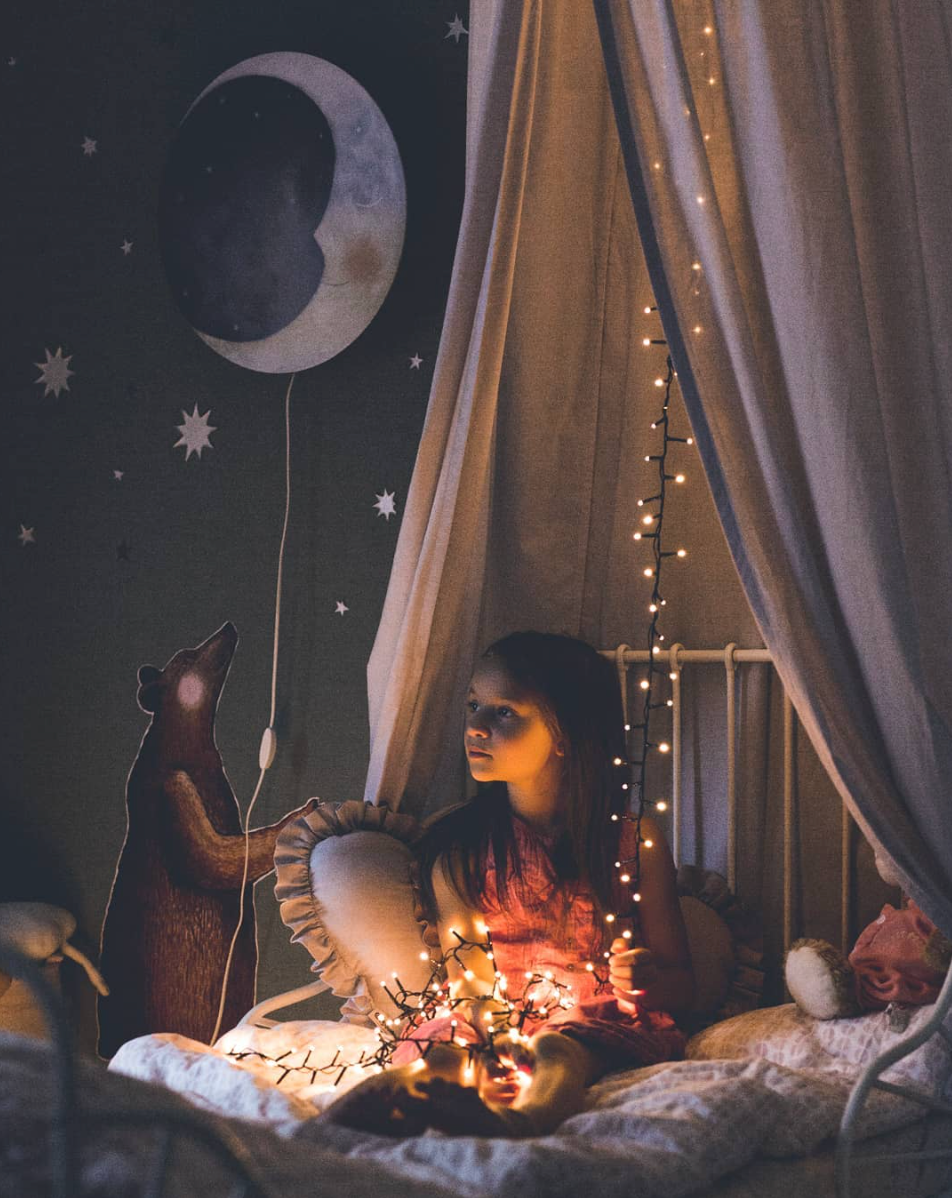
You can also make a small light in the nursery part of the bedtime ritual. The moment the big light goes off and a smaller lamp comes on tells a child: now it is quiet, and nearly time to sleep. At Hartendief that moment plays an extra role. By day you see one picture on the lamp. Switch on the light and a second, hidden world appears, with animals, stars and a story of its own.
Three layers of light: ceiling, wall and night
A well-lit nursery usually has three kinds of light.
- General light on the ceiling: for daytime, playing and tidying up.
- Mood lighting on the wall: for the evening, reading and cuddles.
- Night light: for when your child wakes up, or for a night feed.
You do not have to buy all three at once. Start with what you will use most right now and add the rest later.
The ceiling: a pendant lamp as the base
The pendant lamp provides the general light in the room. Choose a shade that spreads the light nicely and suits the theme of the room. Hartendief pendant lamps are 30 centimetres across, 23 centimetres tall and hang from a white cord pendant of 80 centimetres. They take a bulb of up to 60 watts. Bright enough for a good overview.
Here, too, a secret is hidden in the shade. The Jungle pendant lamp is fresh green by day, with large tropical leaves. With the light on, Elephant, Tiger and Tapir wander through the rainforest and Toucan tries to sing. The Full Moon pendant lamp shows a forest in black and white on the outside. Switch it on and a clear night appears, with a full moon, thousands of little stars and little Foxes setting off on an adventure. Not sure whether to choose a pendant lamp or a wall lamp? Then read the blog post “Wall lamp or ceiling lamp in the nursery: which to choose?”
The wall: mood lighting for reading
A wall lamp gives soft, indirect light at eye level. That is lovely for reading, or for a last chat together before bed. A wall lamp also takes up no space on the bedside table or the chest of drawers.
Hartendief wall lamps are usually 45 centimetres across and have a white 1.70 metre cord with an on/off switch. They are open at the sides and sit about 10 centimetres from the wall, so that the light falls softly along it. They take an energy-saving bulb with a small fitting (E14), up to 30 watts. Which bulb exactly to choose is covered in “Which bulb fits a nursery lamp?”
The Sleepy Moon wall lamp is a smiling moon by day. As soon as you switch the lamp on in the dark, Bear, Fox and Deer look up together at the twinkling stars. With the Summer Night wall lamp, Fox and Badger listen to Squirrel by day, and in the evening little fairies sprinkle magic dust while the fireflies dance. You will find all wall lamps in the collection nursery wall lamps. How to hang a wall lamp firmly and safely is covered in our frequently asked questions, among other places.
The night: a light that may stay on
A night light helps with night feeds and changes and gives many children a feeling of safety. You do not necessarily need a separate lamp for that. Many Hartendief wall lamps can be used as a night light with a low-wattage bulb, for example 15 watts. With the Sunny the Lion wall lamp that fits the story nicely: by day Sunny dozes in the sun with his eyes closed, and when it gets dark he opens his eyes and watches over your child.
If you would like something besides the lamp that glows softly, stick Glow in the Dark Starry Sky Stickers above the bed. By day they are soft pastel yellow, in the dark they glow green. You can read more about wall night lights in our guide A wall night light for the nursery: how to choose one, and if you love the moon, you will find inspiration in Moon lamp for the nursery: what to look for.
Which light suits which age?
Baby (0 to 1 year). In the baby months, good lighting is mostly about the night. A soft light that does not shine straight into the baby's eyes makes feeding and changing calmer. And you wake up less fully yourself, too... So do not hang the wall lamp directly above the cot, and certainly keep it out of reach of grabby little hands.
Toddler (1 to 3 years). Toddlers love rituals and repetition. A lamp with a hidden picture becomes part of bedtime all by itself: first the light on, then the bedtime book, then saying goodnight to all the animals together. Goodnight Badger, goodnight Owl...
Around this age a child may also become afraid of the dark.
In our guide Is your child afraid of the dark? How to help them fall asleep you can read what can help.
Preschooler and school-age child (4 years and older). Now a reading corner becomes important. You can hang the Mouse Castle lamp on the wall or put it on a desk, bookshelf or cupboard. It is made of recycled ecoplex wood, and the windows glow beautifully. In the tower room Lantern Mouse is looking for Ghost Mouse: can you find him?
Warm white or cool white?
For a nursery, warm white is the best choice, especially in the evening. Warm white light is yellower and softer; cool white is bluer and feels more like daylight. On a bulb's packaging this is often given as a colour temperature in kelvin: the lower the number, the warmer the light. Warm white is usually around 2700 kelvin.
Sleep experts recommend using warm, dimmed light in the hour before bedtime and avoiding bright, cool light. That fits nicely with an evening ritual with a wall lamp instead of the big ceiling light. How light and sleep are connected is covered in “Light and sleep: which night light helps your child fall asleep?”
Light and the colour of the wall
The colour of the wall also influences how light falls in the room. A light, warm shade reflects the light of a wall lamp back softly, so that the whole corner around the bed gets a warmer glow. A dark wall absorbs more light and makes the room cosier in the evening, but by day you then need a little more ceiling light. At Flexa or Histor, take a look at off-white, soft sand or a muted green or blue: these are shades that go well with Hylkia's soft watercolours. Hang the wall lamp preferably on a plain stretch of wall, so that the picture looks its best when the light is on.
Dimming and wattage
The easiest way to make a wall lamp softer is a bulb with a lower wattage. An energy-saving LED bulb with low power gives soft light and stays cool.
If you really want to dim, choose a dimmable bulb and a matching dimmer. With an LED bulb, check that the packaging says dimmable, otherwise it may flicker.
Stick to a maximum of 30 watts for the wall lamps and 60 watts for the pendant lamps, as stated in the product description.
Safety in the nursery
A few simple rules make the lighting in the nursery safe:
- Out of reach: hang a wall lamp so that your child cannot grab it from the bed or the changing table. Switching the light on is fine, under supervision. But as a parent, you decide that yourself, of course.
- Cord out of the way: do not let the cord run loose across the floor or along the bed. A cable channel or a few clips along the wall help.
- Firmly fixed: for the wall lamps we recommend two hooks. That prevents the lamp from being pulled off the wall by enthusiastic little hands.
- Cool bulb: choose an energy-saving bulb, which gets less hot than an old-fashioned incandescent bulb.
We had a classic mushroom lamp by Heico standing on the floor, and they had so many more lovely things. Wall lamps were hard to find, so I quickly made all sorts of things myself. And glow-in-the-dark stars on the ceiling! Those were honestly the best: lying in bed staring at them for hours and watching them glow less and less, until by then you had fallen asleep.
Putting it together
An example for a baby room: a pendant lamp as the base, and a wall lamp next to the changing table or the rocking chair with a 15 watt bulb for the night. For a toddler room: the same wall lamp, topped up with stars above the bed. For a school-age child: a reading lamp in the reading corner. Preferably choose lamps from the same world, so that the room tells one story. You will find all lamps in the collection Nursery Lighting.
Frequently asked questions
What is the best lighting for a nursery?
A combination of three kinds of light: a pendant lamp for the day, a wall lamp for the evening and a soft night light. For the evening, choose warm white light.
Which bulb fits a Hartendief wall lamp?
An energy-saving bulb with a small fitting (E14), up to 30 watts. For use as a night light, choose a low wattage, for example 15 watts.
How high should you hang a wall lamp in the nursery?
So that your child cannot reach it from the bed and so that the light does not shine straight into their eyes.
Fix the lamp with a screw or nail, and for extra stability with two hooks on the frame.
Is warm white or cool white better for a nursery?
Warm white, especially in the evening. Sleep experts recommend warm, dimmed light in the time before bed.
Can a wall lamp stay on all night?
Many parents leave a low-wattage wall lamp on as a night light.
Then use an energy-saving bulb, which stays cool.